The 24/7 Economy and the On-Demand Patient: Why America's Always-On Culture Is Rewriting the Rules of Drug Information Access
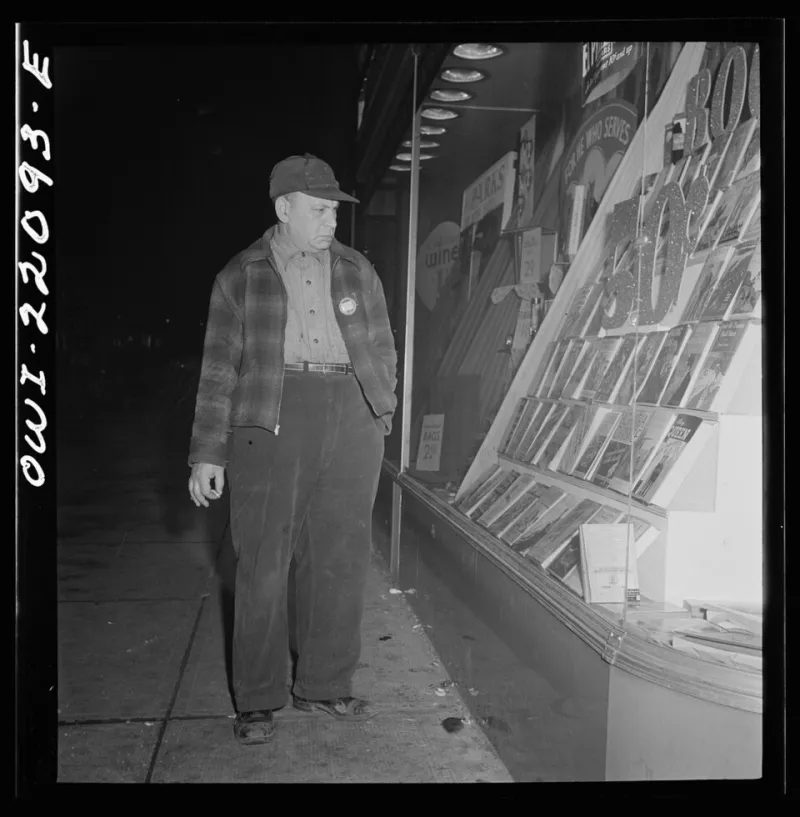
Photo: Marjory Collins, Public domain, via Wikimedia Commons
America does not sleep. Not really. At any given hour, roughly 15 million Americans are on the clock — stocking warehouse shelves, monitoring hospital floors, dispatching emergency services, driving long-haul freight across darkened interstates. The Bureau of Labor Statistics estimates that approximately one in five full-time American workers now operates on a non-traditional schedule, a figure that has climbed steadily for three decades and accelerated sharply in the post-pandemic labor market. These workers are not a fringe demographic. They are nurses and logistics coordinators, data center technicians and food processing workers, security personnel and air traffic controllers. They are, in short, a substantial and structurally essential segment of the American workforce.
And they have a pharmaceutical problem.
The Mismatch Between Work Hours and Healthcare Hours
The architecture of American healthcare was constructed, largely, around a nine-to-five world. Physician offices open at 8 a.m. and close by 5 p.m. Pharmacies in rural and suburban markets frequently observe similar hours. Drug information centers affiliated with academic medical centers — historically among the most authoritative sources of clinical pharmaceutical guidance — operate on schedules that reflect academic calendars, not industrial ones. Even hospital-based pharmacy services, which nominally function around the clock, often reduce to skeleton staffing during overnight hours, limiting the depth of clinical consultation available.
For a warehouse supervisor in Memphis who works 10 p.m. to 6 a.m. and wakes at 3 p.m., the window for a routine pharmacy consultation is vanishingly small. For a traveling nurse in Phoenix who picks up overnight shifts across multiple facilities, the question of which medications interact with her prescribed antidepressant may not surface until she is mid-shift, mid-crisis, and mid-internet-search. For the long-haul trucker managing Type 2 diabetes on a regimen that includes a corticosteroid injection for a chronic back condition, questions about how dexamethasone affects blood glucose may arise at a truck stop in rural Nebraska at 2 a.m. — not during a scheduled office visit.
This is not a niche inconvenience. It is a systemic misalignment between the rhythms of contemporary American labor and the infrastructure of pharmaceutical care.
Patient Autonomy in the Age of Instant Information
The shift work phenomenon intersects with a broader cultural transformation: the rise of the activated, self-directed patient. Americans increasingly expect to research, evaluate, and act on health information independently — a trend accelerated by the explosion of digital health resources, direct-to-consumer pharmaceutical advertising, and the normalization of online medical research. A 2023 Pew Research Center survey found that 77 percent of American adults have searched for health or medical information online, and a significant proportion report doing so before or instead of consulting a healthcare provider.
This is not inherently problematic. Patient engagement correlates with better adherence, improved chronic disease management, and more productive clinical encounters. The challenge lies in the quality and accessibility of the information these self-directed patients find. A shift worker researching a potential drug interaction at midnight is not well-served by a Google result leading to a consumer forum thread from 2014 or a pharmaceutical manufacturer's FAQ page that hasn't been updated since the drug's original approval. They need the same quality of pharmaceutical data that a clinical pharmacist would consult — presented accessibly, updated continuously, and available without a subscription barrier or a business-hours caveat.
The Corticosteroid Example: A Case Study in After-Hours Information Demand
Consider dexamethasone — a corticosteroid with an extraordinarily broad clinical footprint. It is used in oncology, emergency medicine, critical care, orthopedics, allergy management, and pediatric respiratory illness. It interacts with dozens of commonly prescribed medications. Its effects on blood glucose, immune function, adrenal axis activity, and bone density are clinically meaningful and frequently misunderstood by patients. And it is prescribed across the full spectrum of American healthcare settings, including urgent care centers, emergency departments, and telehealth platforms that operate at all hours.
A patient who receives a dexamethasone injection at an urgent care clinic at 11 p.m. for a severe allergic reaction may not have the opportunity to speak with a pharmacist before leaving. If that patient is also taking warfarin, metformin, or an azole antifungal, the interaction implications are significant and immediate. The question of what to monitor, what to avoid, and when to seek follow-up care does not pause until the next morning. Neither should the answer.
This is precisely the use case that defines the emerging demand for always-on pharmaceutical intelligence: not exotic clinical scenarios, but ordinary patients with ordinary medication regimens encountering time-sensitive questions outside the boundaries of conventional healthcare access.
What the Boardroom Is Getting Wrong
Despite the structural reality of shift work culture and its implications for healthcare access, institutional pharmaceutical information infrastructure has been slow to adapt. Hospital pharmacy departments continue to staff down overnight. Academic drug information centers have not significantly expanded their hours. Many state Medicaid programs still restrict telepharmacy services in ways that limit after-hours access for low-income populations — who are disproportionately represented in shift work occupations.
The private sector has moved faster, but unevenly. Direct-to-consumer telehealth platforms have proliferated, offering after-hours prescribing access. What many of these platforms do not offer, however, is the depth of pharmaceutical reference data that contextualizes those prescriptions — the interaction profiles, the dosing nuances, the monitoring parameters that distinguish safe medication use from dangerous improvisation.
The gap between prescription access and pharmaceutical intelligence is widening at precisely the moment when the American workforce most needs them to converge.
The Expectation Shift Is Already Here
Perhaps the most significant development in this space is not structural but attitudinal. A generation of Americans who have grown up with on-demand streaming, instant digital banking, and 24-hour e-commerce has internalized the expectation that critical information should be available at any hour. That expectation does not evaporate when the subject matter shifts from entertainment to healthcare. It intensifies.
Patients who are accustomed to researching a product at midnight before purchasing it will not accept being told to call their pharmacist in the morning when they have a question about a medication they are actively taking. Nor should they. The consequences of a missed drug interaction or a misunderstood dosing instruction are not recoverable in the way that a delayed consumer purchase is.
The healthcare information ecosystem must meet patients where they are — and increasingly, where they are is awake, online, and in need of reliable pharmaceutical guidance at an hour when the traditional system has gone home for the night. Platforms committed to providing trusted, continuously available pharmaceutical data are not filling a niche. They are filling a structural void that the 24/7 American economy has made impossible to ignore.